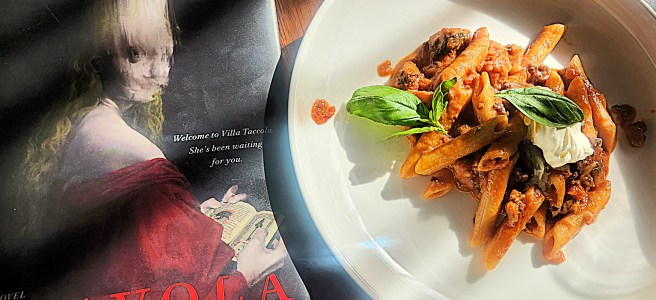
For a supposedly haunted house ghost story, the most terrifying thing in this book was the Pace family. Seriously. Hoo boy were they a big ol’ mess. I mean, I have a dysfunctional family. You have a dysfunctional family. Hell, who doesn’t have a dysfunctional family? But the Pace family puts the “fun” in dysfunctional. Diavola tells the story of Anna Pace, on vacation in a villa in Italy with her parents, sister Nicole, Nicole’s husband and their two daughters, Anna’s twin brother Benny and Benny’s current lover Christopher, who is one of the nastiest characters in recent literature.

This family was something else. Even Anna, the narrator, has some major issues, being both simultaneously self-absorbed and a total doormat to her family. A classic black sheep of the family, Anna is a graphic designer in New York who is always the odd one out with her family, and being in a beautiful villa in Italy with a pool, lots of Italian wine and delicious food, and a ghost doesn’t change that. This gorgeous estate is secluded from the town of Monteperso, but everyone knows exactly about this cursed house. The locals, of course, play the Greek chorus role of slowly revealing the nature of the haunting.
It turns out that the villa is haunted not by one ghost, but by the spirits of several people who have stayed there over the years. The resident demonic ghost, Dama Bianca, was evil during her Renaissance lifetime and was spurned by a married lover. She was referred to as a she-devil, hence the book’s title. Her spirit has haunted the villa for centuries, creating havoc among the families and friends who stay in the house, separating out the one person who is “different” and haunting them until they commit suicide and their spirits are forever trapped in the house with Dama Bianca. Once Anna realizes the nature of the haunting, she fights back in her own unique way.

I wouldn’t characterize this as horror, even though there are the supernatural elements of the haunted house and possession by a demonic spirit, and those elements were quite well done. But at its heart it’s about how our families are what truly haunt and possess us. There is a significantly toxic dynamic between all of these family members, and even though initially it seems like a relatively normal family dysfunction, you slowly start to see that the bond between Anna and Benny is truly messed up. But what makes it both compelling reading and hard to read is seeing just how much simmering resentment there truly is directed at Anna. Sure, she’s as irritating as the rest of them, but they sure do have it out for her and it’s never really explained why, other than she’s the “black sheep.”
I think my only beef with the book is the fact that the family characters, other than Anna, are somewhat two-dimensional. There’s the distant, uninterested father. There’s the overly chatty, always blaming mother constantly seeking fault. There’s the tightly wound, control freak sister who is jealous of Anna. There’s the co-dependent twin who seemingly wants to live his own life and yet is in constant conflict with his sister. I suppose, given that the book is really meant to tell Anna’s story, that having limited character development is somewhat desirable, but I think the family drama might have been more compelling if the other family members were a bit more complex. Still, that’s a minor quibble.

The descriptions of the town of Monteperso and the small surrounding Italian villages are quite lovely and give somewhat of a travelogue vibe to the book. The villa itself is described in such terms as to make you want to spend a summer there enjoying the beautiful swimming pool, the gorgeous kitchen and the large, open rooms. Being an avid cook, I had an image of myself cooking up a five-course Tuscan feast in that very kitchen. Which ironically, being set in Italy, the book had very few specific food scenes. There are, of course, scenes where they go eat at a nice Italian trattoria but the only food description there was when Anna ordered pizza. Boring. Then there is the early scene when everyone has finally arrived at the villa and Nicole cooks, though not very excitingly.

Nicole had cooked an enormous pot of pasta with fresh ingredients from the local outdoor market and still somehow made it taste like an American TV dinner.
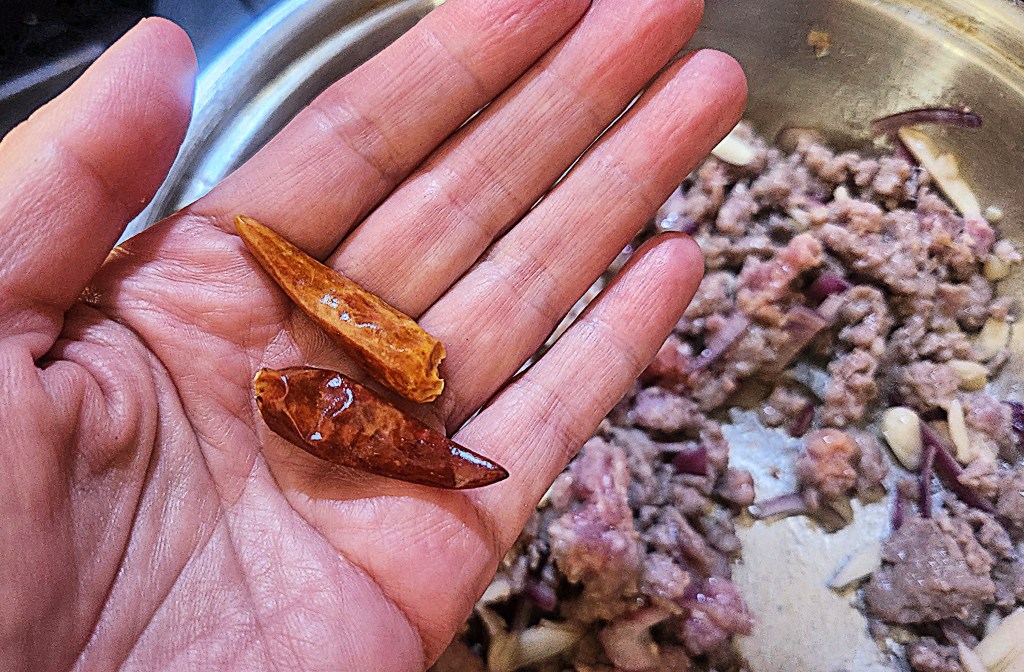
Well, that’s a ringing endorsement for letting your control-freak sister cook on a family vacation! Though that passage does give quite a bit of leeway, so looking in my pantry, refrigerator and garden, I found penne, plum tomatoes, dried Calabrian red chilies, burrata and Parmesan cheeses, and some lovely fresh basil. Voila! Pasta alla diavola with basil, burrata and Parmesan seemed just the thing to ward off evil spirits.

INGREDIENTS
10 cloves garlic, peeled and slivered
1 medium-sized red onion, diced
3 tablespoons olive oil
1 tablespoon butter
3 teaspoons red pepper flakes
1 14-oz. can peeled plum tomatoes
2 tablespoons tomato paste
1/2 cup dry red wine
Several sprigs of fresh basil
4 pork sausages
1 and 1/2 cups of penne pasta
1 ball of burrata cheese
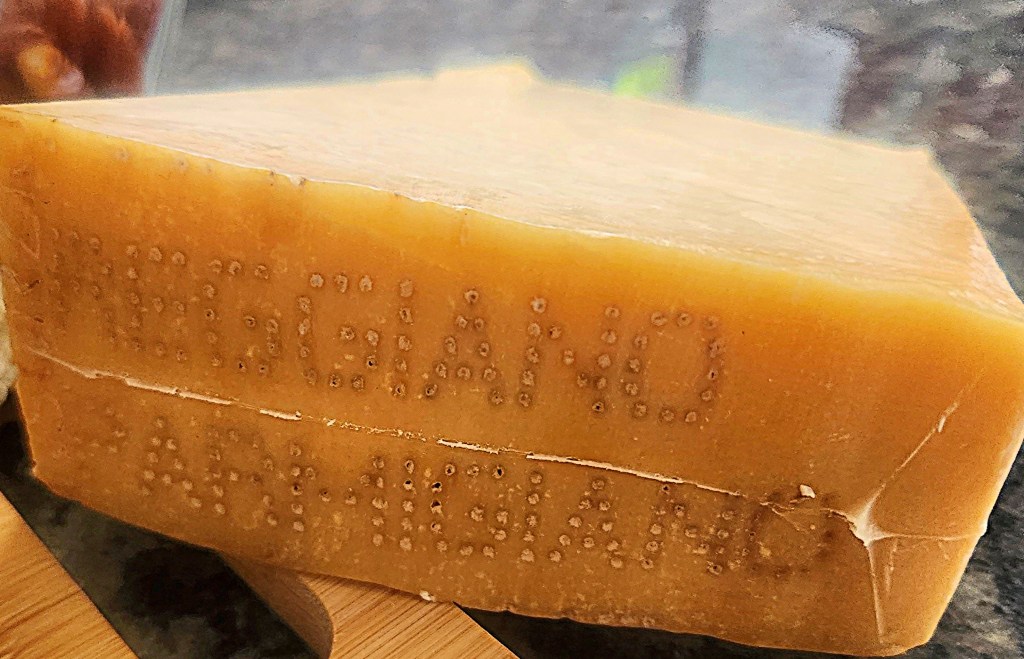
1 cup freshly grated Parmegiano Reggiano cheese
METHOD
Melt the butter with the olive oil in a pan over medium heat and add the slivered garlic and diced onion. Sprinkle with salt and sauté for about 7 minutes.

Squeeze the pork sausage meet out of the sausage casings into the onion and garlic mixture, and break up the meat using a wooden spoon.

Add the tomatoes, squeezing them until they burst, to the meat, then add the red pepper flakes and tomato paste.

Rinse out the tomato can with red wine and add it to the tomato and meat mixture.

Mix everything together, then add the sprigs of fresh basil to the sauce and stir to mix.

Let everything simmer gently uncovered for about 30-45 minutes so that the sauce thickens.

While the sauce is simmering, bring a large pot of salted water to a high boil, and add the pasta, stirring occasionally so that the penne noodles don’t stick together.

Once the penne is al dente, scoop out the pasta and add it directly to the sauce, incorporating some of the starchy pasta water to help the sauce cohere and cling to the pasta.

Add the burrata to the saucy pasta and stir to incorporate. It will make the sauce paler and give it a lovely creaminess.

Grate in some fresh Parmegiano Reggiano cheese and again, stir to mix.
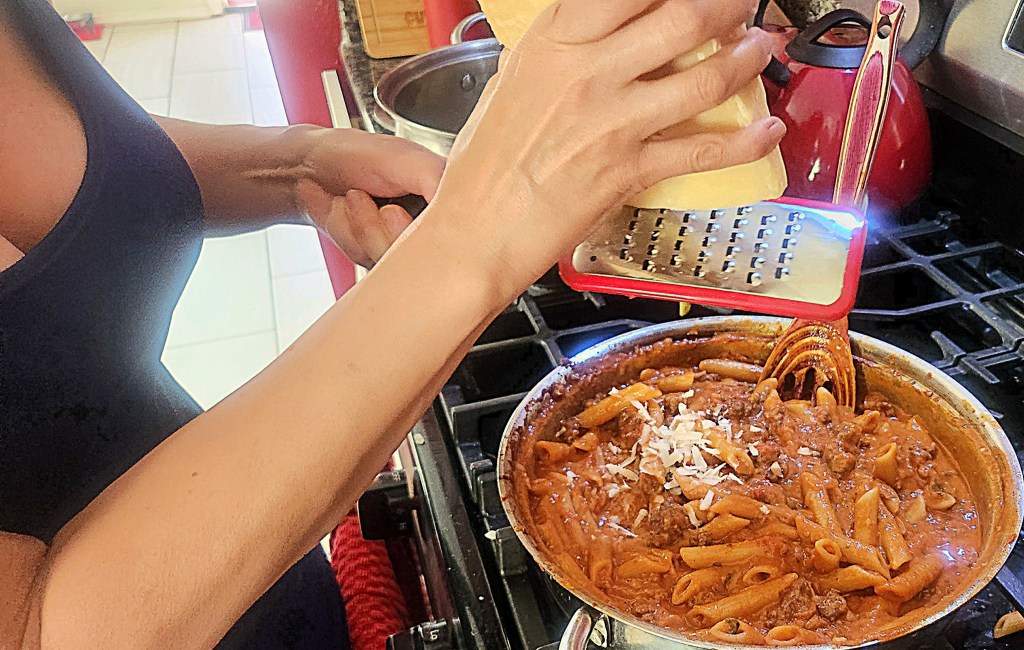
Taste for seasoning and add more salt if needed. Decant the pasta into large bowls and add the last bit of burrata and fresh basil to the top of each dish. Apply to face.

It is a truly devilishly delicious dish, rich, spicy and creamy with the delicious tang of the cheese to undercut the richness. I certainly think Dama Bianca would want to devour a bowl instead of my soul. (See what I did there? 🙂


 Food In Books
Looks delicious!
LikeLiked by 2 people
Grazie! We very much enjoyed it. I hadn’t used burrata in cooking before, just had it on bread, but I am now hooked. The creaminess so so wonderful.
LikeLiked by 1 person
Sounds like a fun read! And that pasta looks devilishly delicious!
LikeLiked by 1 person
Thank you! It definitely had a devilish kick.
LikeLike